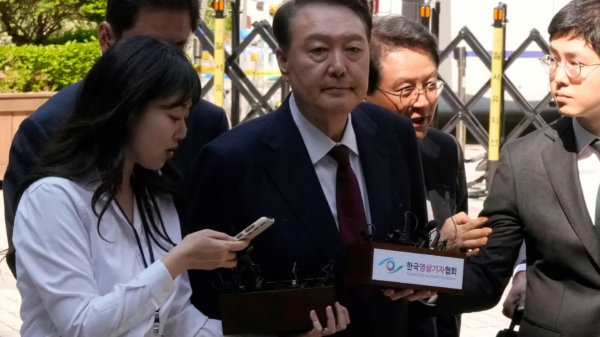







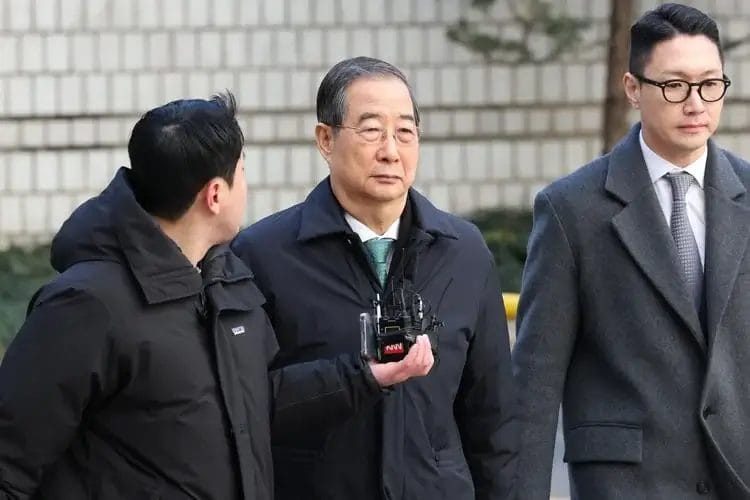
SEOUL — A South Korean court on January 21, 2026, handed down a 23-year prison sentence to former prime minister Han Duck-soo, finding him guilty of insurrection and other charges connected to the contentious martial law declaration attempt in late 2024. The ruling underscores deep legal and political ramifications from an episode that shook confidence in the nation’s democratic institutions.
Han Convicted in High-Profile Martial Law Case
The Seoul Central District Court concluded that Han, 76, played a central part in legitimizing then-President Yoon Suk Yeol’s decision to impose martial law — an act the court said amounted to rebellion against the constitutional order. Prosecutors had accused him of helping engineer a cabinet meeting to give procedural cover to the decree and conspiring to hamper legislative authority.
In addition to the insurrection count, Han was convicted of falsifying official documents, destroying evidence and lying under oath, all of which contributed to the lengthy sentence. His prison term surpasses the 15 years initially sought by prosecutors.
After the verdict, Han declared he would accept the court’s ruling but has the option to appeal to the Supreme Court. Immediately following the judgment, he was taken into custody.
Political Fallout and Broader Legal Proceedings
This sentencing marks the first time a senior cabinet figure has been convicted in connection with the failed martial law effort — an event that lasted only hours but triggered fierce political backlash.
Former President Yoon Suk Yeol, already serving a five-year sentence related to aspects of the same episode, faces additional trials, including a separate insurrection case for which prosecutors are seeking the death penalty.
Han’s conviction is seen as a significant moment in South Korea’s judicial reckoning with the crisis and could influence outcomes in the remaining court cases against other former officials involved.