


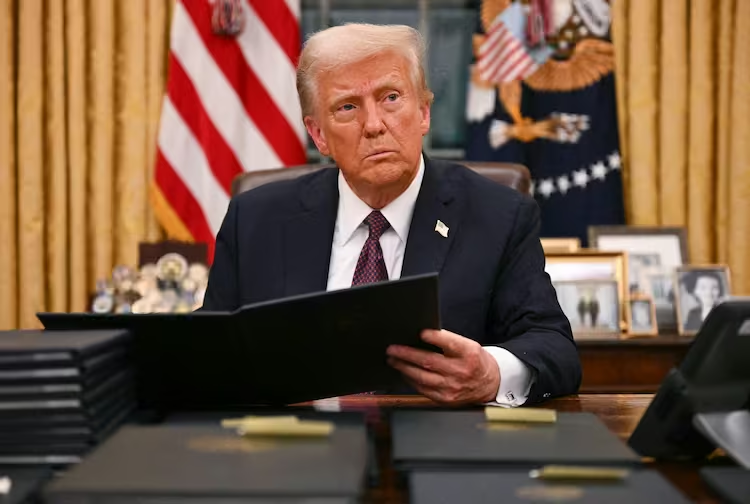
Since returning to office, Donald J. Trump has exercised clemency to absolve more than 1,800 people convicted of a range of offenses — many tied to the 2021 attack on the United States Capitol. But a disturbing trend has emerged: at least a dozen of those now-pardoned individuals have since been re-arrested for unrelated crimes. Legal experts and political analysts say the wave of pardons bypassed traditional vetting procedures — making repeat offenses more likely and undermining public trust in the justice system.
Mass Pardons, Minimal Vetting
Since 2016, Trump has granted clemency more than 1,800 times — including over 1,600 pardons and commutations during his second term in 2025. Many of these clemencies benefited individuals indicted for their part in the January 6 Capitol attack.Yet unlike previous administrations, which relied on the formal review process of the Justice Department’s pardon-attorney office, this round of clemency largely sidestepped such oversight, say constitutional scholars.
Recidivism Among the Pardoned: A Troubling Pattern
Among the pardoned, several individuals have already been re-arrested for serious, unrelated offenses — from violent assaults to sexual crimes and weapons violations. In one notable case, a former rioter who had pleaded guilty for assaulting officers during the Capitol breach was later detained for online solicitation of a minor.
Human rights advocates and legal observers say these developments expose a fundamental flaw: when clemency is granted without thorough review, it risks signaling to offenders that their past — and future — crimes may be excused.
Undermining the Rule of Law, According to Experts
Constitutional and legal experts warn that the unchecked pardon process — especially on such a large scale — threatens to erode foundational trust in judicial accountability.
Traditionally, pardons have involved detailed assessments, often including evidence of remorse and rehabilitation. But in this recent sweep, many pardoned individuals showed little sign of reform — and some reverted to criminal behavior almost immediately.
With recidivism rising among pardoned individuals, critics now question whether presidential clemency — when done without discretion or oversight — effectively protects public safety or undermines it.


