





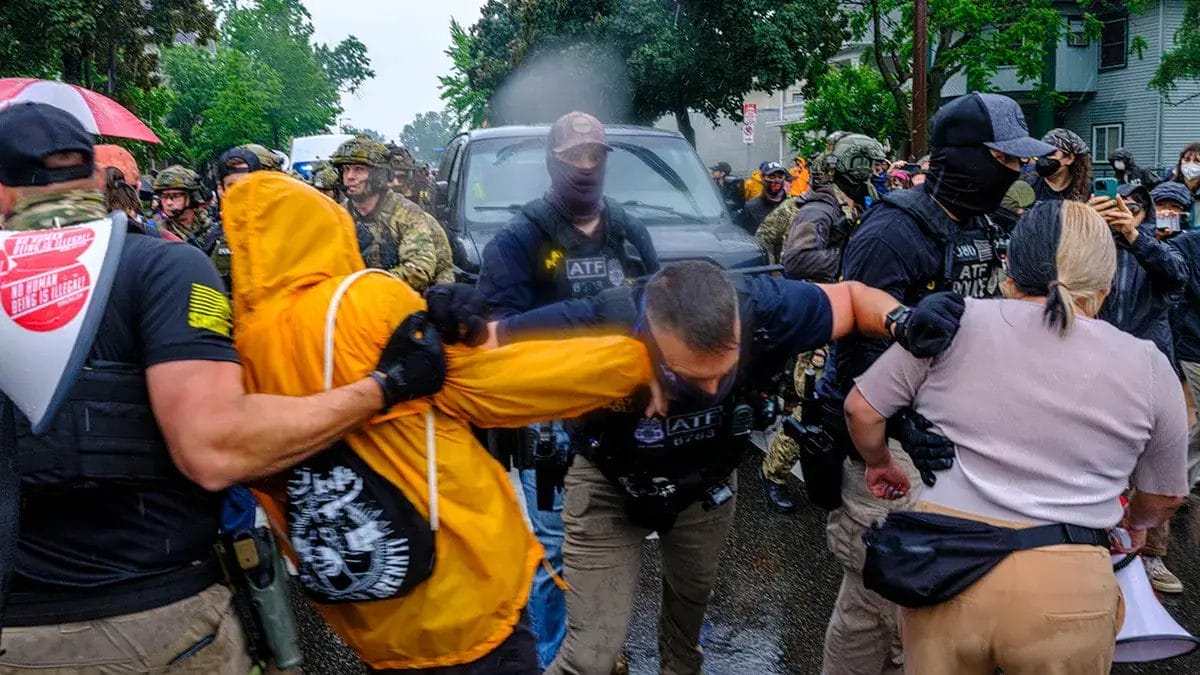
The White House is facing criticism after publishing a photo on social media that was digitally altered to depict a Minnesota protester as crying during her arrest. The image, shared on X by official accounts, drew immediate backlash from observers who noted the manipulation, raising questions about the use of edited visuals in political communication.
Photo Altered to Show Tears
Officials on Thursday posted an image showing a protester — identified as civil rights attorney Nekima Levy Armstrong — with a distressed, tearful expression as she was taken into custody during a protest in St. Paul, Minnesota. Independent analysis found that this version had been edited from an earlier, unaltered photo, which showed Armstrong with a neutral look while being led by law enforcement.
Critics and fact-checkers pointed out that key elements of both photos, like the positioning of the officer and background figures, matched, indicating the tearful version was a manipulated iteration of the original.
Official Response and Public Backlash
When asked about the discrepancy, White House officials responded indirectly on social media, characterizing the altered image as part of continued messaging rather than acknowledging it was edited. A deputy spokesperson’s remark suggested that such “memes” would continue alongside law enforcement updates.
Observers and users on social platforms criticized the decision, arguing that presenting an edited image without disclaimer undermines public trust and contributes to misinformation in political discourse.
Broader Debate Over Edited Political Imagery
The incident has intensified debate about the use of digitally manipulated content in official government communication. Experts warn that widespread deployment of such images could erode confidence in authentic news and blur the line between factual reporting and political messaging.
As political actors increasingly incorporate AI and deepfake-like visuals in messaging strategies, questions about ethics, transparency, and the impact on public trust are drawing greater scrutiny from both media watchdogs and the public.



