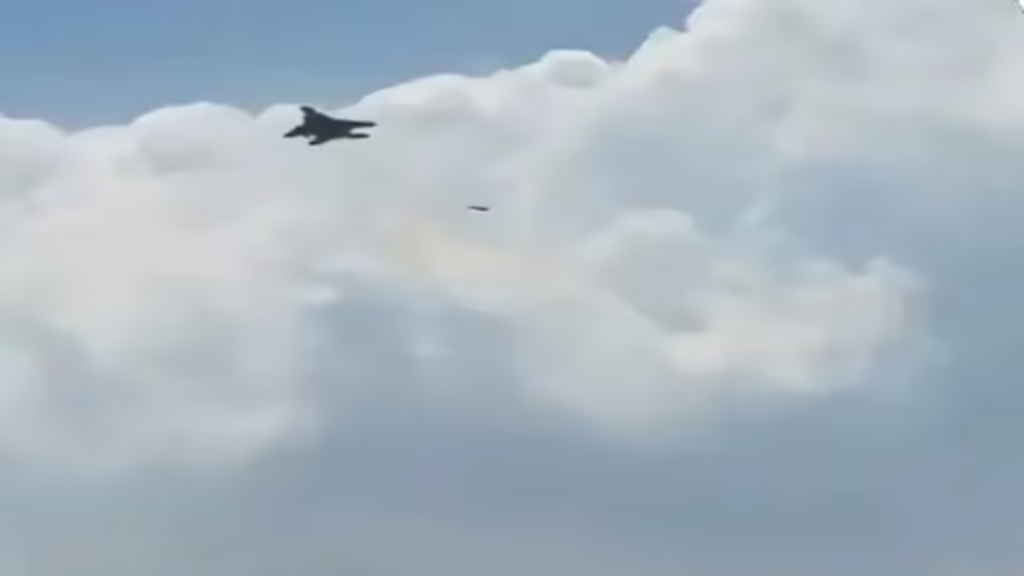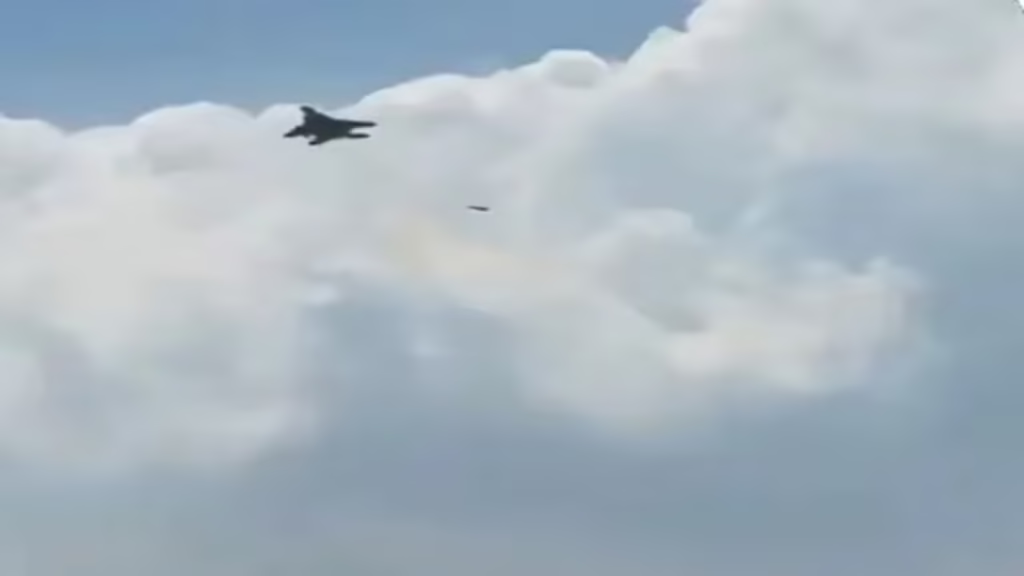





Tensions in the Middle East have intensified after Iran issued a strong warning to European countries, urging them to avoid involvement in the ongoing conflict with the United States and Israel. Iranian officials stated that any military participation or support from European nations would be considered a hostile act and could lead to direct retaliation. The warning comes amid expanding military actions, rising casualties, and growing concerns about regional stability and global energy supply.
Iran Issues Warning to European Nations
Iranian officials have cautioned European governments against joining the ongoing military operations targeting Iranian territory. According to Tehran, any support for attacks or participation alongside the United States and Israel would be treated as an act of war.
Iran’s deputy foreign minister said European countries could become legitimate targets if they actively participate in the conflict. The statement signals Tehran’s readiness to expand the confrontation beyond the Middle East if additional countries become involved.
Iran has repeatedly insisted that it is responding to attacks on its territory and leadership and warned that further escalation by Western powers would bring “serious consequences.”
Rising Casualties and Expanding Military Actions
The conflict has already resulted in significant casualties and destruction across several regions. Iranian officials reported that more than a thousand civilians have been killed during the ongoing hostilities, while military strikes and counterattacks continue across multiple fronts.
At the same time, missile and drone attacks have been reported in various parts of the Middle East. Some Gulf nations have intercepted Iranian drones and missiles as tensions spread across the region.
The conflict has also affected strategic shipping routes, particularly around the Strait of Hormuz — one of the world’s most critical energy corridors — raising fears of disruptions to global oil supplies.
Global Concerns Over Escalation
International leaders are increasingly worried that the conflict could widen if additional countries become involved. Several governments have begun evacuating citizens from affected areas, while diplomatic channels remain active in an attempt to prevent further escalation.
Security agencies in Europe have also warned that the crisis could increase the risk of cyberattacks, extremism, and other security threats linked to the conflict.
Energy markets have already reacted to the instability, with oil prices rising due to concerns over shipping disruptions and supply shortages.
Conclusion
Iran’s warning to European nations highlights the growing risk that the current conflict could expand into a wider international confrontation. With military actions continuing and diplomatic efforts struggling to calm tensions, the situation remains volatile. Analysts warn that further escalation could have significant consequences not only for the Middle East but also for global security and energy markets.