





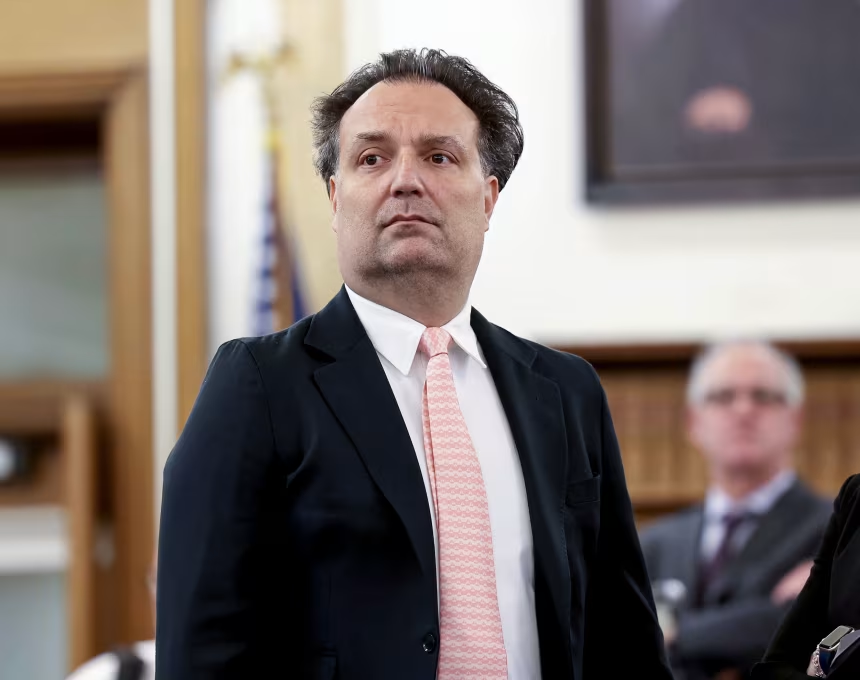
A man accused in the disappearance of his wife has admitted to disposing of her body and misleading investigators — yet he maintains his plea of not guilty to the more serious charge of murder. With jury selection underway, the court must now determine whether he is responsible for her death. The case draws sharp attention due to the lack of a recovered body and the disturbing details of what authorities say followed her disappearance.
Confession on Disposal, But Murder Charge Still Stands
Shortly before his trial was set to begin, the accused changed his plea: admitting that he unlawfully disposed of his wife’s remains and misled police investigators. Despite this admission, he insists he did not kill her. Prosecutors say that interference delayed crucial leads and resulted in evidence being destroyed when garbage containing traces of the victim was incinerated — a major blow to the investigation. The jury will now weigh whether the disposal plea corresponds with culpability for murder.
What the Prosecution Says: Suspicious Actions and Missing Body
Authorities allege that the wife vanished around New Year’s Day 2023, after a family celebration. The husband initially told police she had left for a work-related trip — but investigators found no evidence she ever flew out. In the days that followed, prosecutors say he conducted online searches like “how long before a body starts to smell” and “best tools to dismember a body.” Meanwhile, they discovered a damaged, bloodied knife in the couple’s basement, along with trash bags containing tools and items bearing his and his wife’s DNA. Crucially, the victim’s body remains missing to this day.
What’s at Stake: Trial, Forensic Gaps, and a Jury Decision Ahead
With the disposal plea resolved, the upcoming trial will focus solely on the murder charge. The absence of a body and the destruction of potential evidence mean the jury must rely on circumstantial evidence — including the victim’s last known whereabouts, forensic traces discovered at the scene, the defendant’s own suspicious behavior, and the pattern of contradictory statements. The verdict could hinge on whether the jury believes the timeline, physical evidence, and conduct are enough to conclude beyond a reasonable doubt that he ended his wife’s life.



