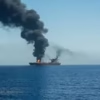
The ongoing war involving Iran has triggered major instability in global energy markets, pushing oil prices higher and raising concerns about supply disruptions. As tensions escalate across the Middle East, statements from U.S. President Donald Trump about the conflict’s progress have added to market uncertainty. While Trump has suggested the war could end soon, he has also warned of stronger military action if Iran interferes with oil shipments, leaving investors and governments unsure about what comes next.
Oil Markets React to War Fears
The conflict has already sent shockwaves through the global oil industry. At the peak of the crisis, Brent crude prices surged to around $119 per barrel as fears grew that supplies could be interrupted by fighting near the Strait of Hormuz, a key shipping route for global energy exports.
The strait handles nearly 20% of the world’s oil shipments, making it one of the most critical energy corridors on the planet. Any disruption there could trigger shortages and fuel price spikes worldwide.
Although prices later dropped to the low $90 range after Trump hinted that the conflict might end soon, the market remains volatile as traders weigh the possibility of further escalation.
Trump’s Conflicting Timeline Fuels Uncertainty
President Trump has repeatedly stated that U.S. military operations in Iran are progressing faster than expected and could conclude quickly. However, he has also warned Tehran that any attempt to block oil flows through the Strait of Hormuz would trigger a response “twenty times harder.”
These mixed signals have created confusion in financial markets. On one hand, investors hear optimism about a potential end to the conflict; on the other, strong warnings suggest the war could intensify if Iran escalates its actions.
Political analysts say the lack of a clear timeline is making it difficult for governments and energy companies to plan for the months ahead.
Global Economy Faces Energy Pressure
Beyond energy markets, the war’s economic impact is spreading globally. Higher fuel costs and supply disruptions are increasing pressure on inflation and economic growth in many countries.
Governments and international organizations are now discussing emergency measures such as releasing strategic oil reserves or coordinating supply efforts with major producers to stabilize prices.
At the same time, analysts warn that if shipping through the Strait of Hormuz is significantly disrupted, the world could face a prolonged energy shock similar to past oil crises.