The United States is reportedly moving forward with plans to deploy thousands of additional troops to the Middle East, signaling rising security concerns in the region. At the same time, Lebanon is grappling with a worsening situation, as officials describe the country’s condition as an “existential crisis” driven by economic collapse and political instability.
U.S. Military Build-Up in the Region
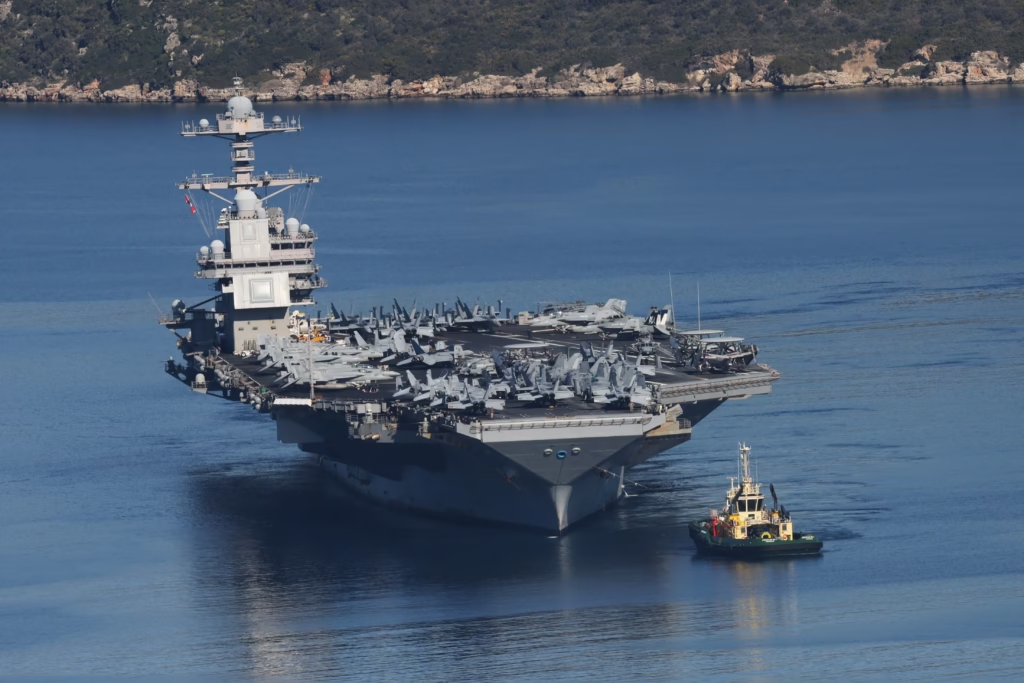
Reports indicate that the U.S. government is preparing to send thousands of additional soldiers to key locations across the Middle East. The move is aimed at strengthening military readiness and protecting American interests amid increasing regional tensions.
Defense officials suggest the deployment is part of a broader strategy to deter potential threats and ensure stability in critical areas. While exact troop numbers and locations have not been fully disclosed, the decision highlights growing concerns over security risks in the region.
🇱🇧 Lebanon’s Deepening Economic and Political Crisis
Lebanon continues to face severe challenges, with officials warning that the country is nearing a breaking point. Years of economic decline, rising inflation, and political deadlock have pushed the nation into what some leaders are calling an “existential crisis.”
Public services remain under strain, and many citizens are struggling with unemployment, currency devaluation, and limited access to basic necessities. The crisis has also intensified social unrest, with protests and dissatisfaction growing across the country.
🌍 Rising Regional Tensions and Global Concerns
The combination of increased U.S. military presence and Lebanon’s internal crisis reflects a broader pattern of instability across the Middle East. Ongoing conflicts, economic struggles, and geopolitical rivalries continue to shape the region’s uncertain future.
Analysts warn that without coordinated international efforts, both security risks and humanitarian challenges could escalate further. The situation remains fluid, with global attention focused on how these developments may impact regional stability and international markets.