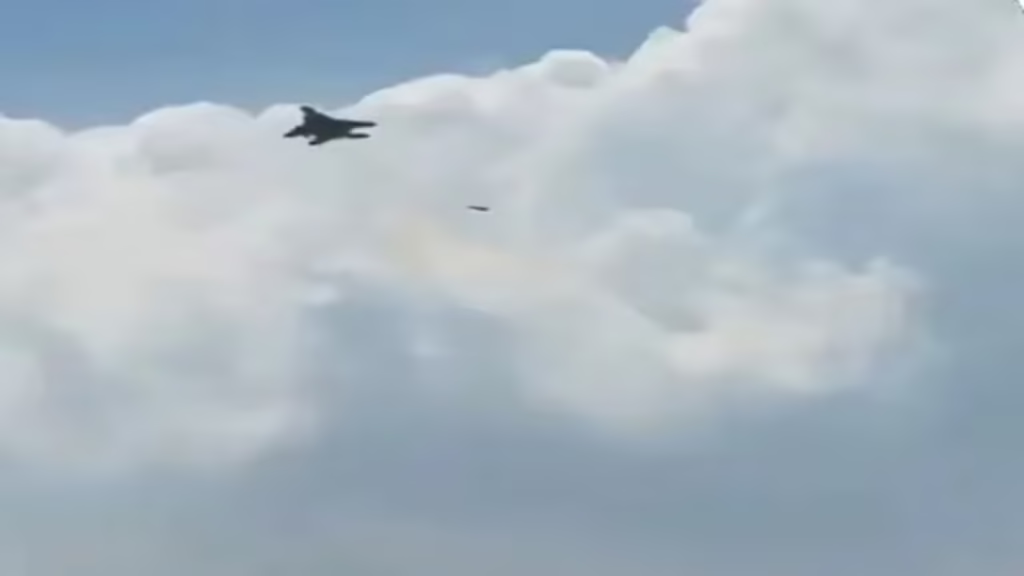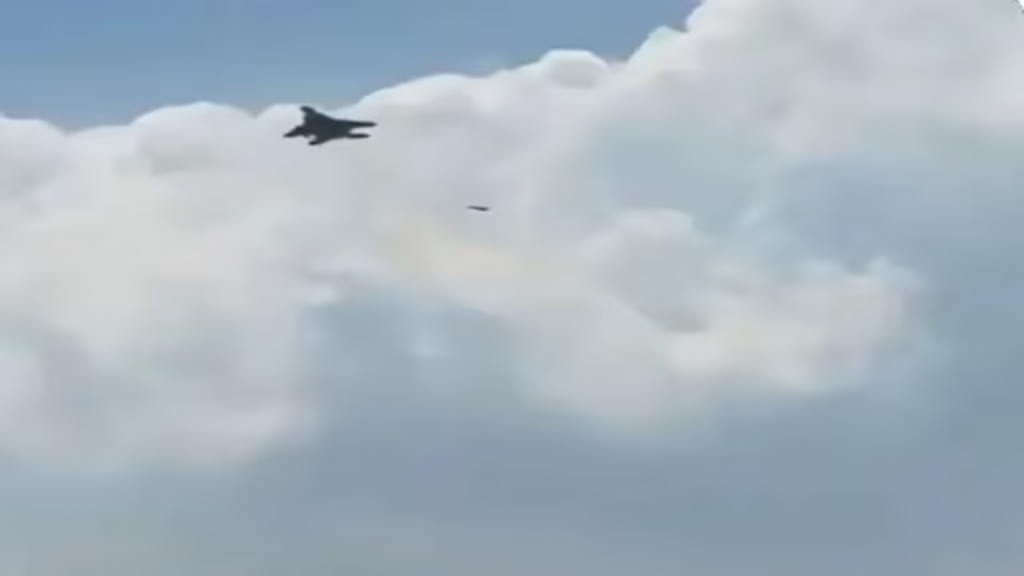





Denmark’s leadership has issued a strong warning over growing speculation about Greenland’s strategic future. The Danish prime minister stated that any military action by the United States against Greenland would mark the effective end of NATO, shaking the foundation of the Western defense alliance and destabilizing Arctic geopolitics.
Greenland’s Status and Strategic Importance
Greenland is an autonomous territory within the Kingdom of Denmark and holds major strategic value due to its Arctic location, natural resources, and proximity to major global powers. While the United States maintains a military presence there under long-standing agreements, Denmark has emphasized that Greenland is not for sale and cannot be taken by force.
The prime minister stressed that sovereignty and international law must be respected, warning that violating these principles would undermine trust between allied nations.
NATO Unity at Risk
According to Mette Frederiksen, an attack by one NATO member on territory belonging to another would fundamentally contradict the alliance’s core values. NATO is built on collective defense and mutual respect, and such an act would make continued cooperation impossible.
She made it clear that Denmark views Greenland as an integral part of its realm, and any hostile move would be treated as a direct threat not only to Denmark but to the credibility of NATO itself.
Arctic Security and Global Impact
The Arctic region is becoming increasingly important due to climate change, new shipping routes, and access to resources. Rising interest from global powers has already heightened tensions. Denmark’s warning highlights fears that unilateral military actions could trigger broader instability, weaken Western alliances, and reshape global security dynamics.
Conclusion
Denmark’s message is clear: any US attack on Greenland would cross a red line. Such a move would not only violate international norms but could also bring an end to NATO as it exists today. As Arctic competition intensifies, diplomatic cooperation remains critical to maintaining peace and alliance unity.