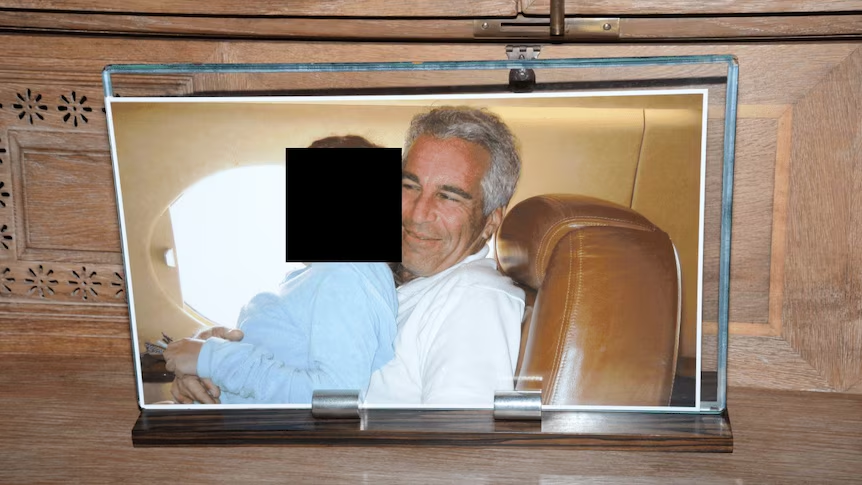
Soon-Yi Previn, the wife of filmmaker Woody Allen, reportedly expressed criticism of the #MeToo movement during a private exchange with Jeffrey Epstein, saying the campaign against sexual misconduct had “gone too far.” The remarks surfaced through communications that have recently come to light, drawing renewed attention to public debates around accountability, culture, and power in the entertainment industry.
Private Remarks Spark Fresh Debate
In the disclosed messages, Soon-Yi Previn appeared to voice concern that the #MeToo movement had exceeded reasonable limits. While the movement has been widely credited with amplifying survivors’ voices and exposing systemic abuse, Previn’s comments suggest a contrasting view — one that questions whether the cultural response has become overly punitive.
The remarks were not made publicly at the time and instead emerged from a private conversation, underscoring how personal opinions shared behind closed doors can later become part of a broader public discussion.
Context Around the Conversation
The exchange reportedly occurred years after the #MeToo movement gained global momentum, reshaping conversations around consent, workplace behavior, and accountability. Epstein, who cultivated relationships with high-profile figures across politics, finance, and entertainment, often engaged in wide-ranging discussions that are now under scrutiny.
Although Previn’s comments reflect a personal perspective rather than an organized stance, their disclosure has reignited polarized reactions online, with critics and supporters interpreting the remarks through sharply different lenses.
Ongoing Reactions and Public Response
The resurfaced comments have prompted renewed discussion on social media and opinion platforms, particularly given Woody Allen’s long-standing controversies. Some observers argue the remarks highlight concerns about due process and public judgment, while others say they risk minimizing the impact and necessity of the #MeToo movement.
As conversations continue, the episode illustrates how private viewpoints tied to public figures can quickly become flashpoints in ongoing cultural debates.