




Japan Signals Return of Global Naval Power Amid Fears of “Existential” Conflict with China
TOKYO – In a historic and controversial shift that effectively shreds decades of pacifist doctrine, Japan is accelerating the most significant expansion of its naval forces since World War II. Following Prime Minister Sanae Takaichi’s landslide election victory this week, the administration has greenlit an unprecedented defense budget exceeding ¥11 trillion ($73 billion) for 2026, explicitly aimed at countering an “imminent” threat from China.
Strategic Shift: The “Counterstrike” Navy
Deep analysis of the new defense roadmap reveals a Japan that is moving far beyond mere self-defense. The core of this rebuilding effort is the acquisition of offensive “counterstrike” capabilities designed to strike enemy bases and command centers deep within mainland China and North Korea.
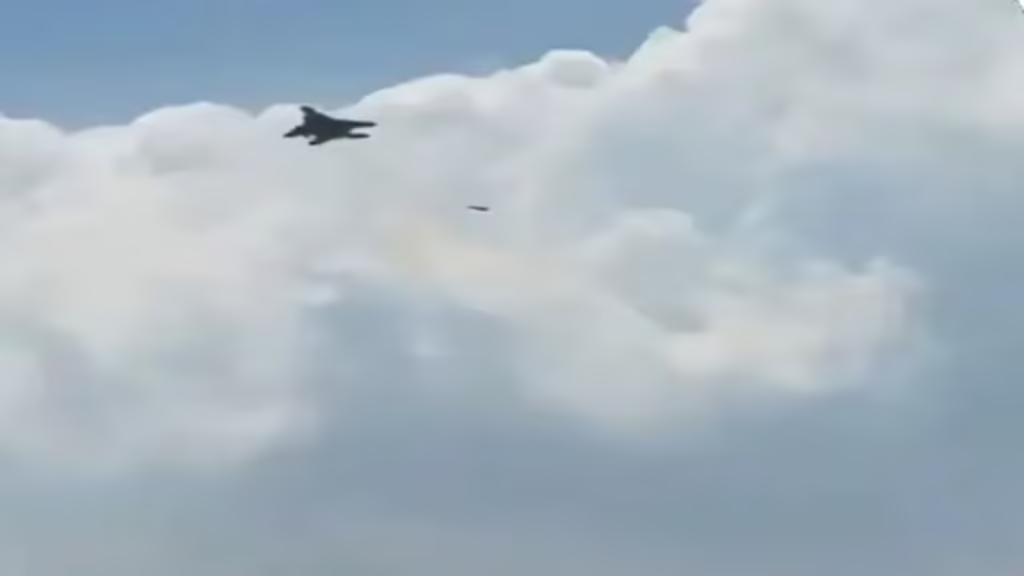
Aircraft Carriers Reborn: The Japan Maritime Self-Defense Force (JMSDF) is finalizing the conversion of the Izumo and Kaga* helicopter destroyers into full-fledged light aircraft carriers. These vessels will soon deploy Lockheed Martin F-35B stealth fighters, giving Japan the ability to project air power far beyond its own shores for the first time in 80 years.
New “Super Cruisers”: Construction is being expedited for two massive 12,000-ton Aegis System Equipped Vessels (ASEV). While officially designated for ballistic missile defense, defense analysts note these ships rival the size of World War II-era cruisers and possess the firepower to dominate regional sea lanes.
Long-Range Missiles: The budget prioritizes the mass production of upgraded Type-12 surface-to-ship missiles with a range of over 1,000 kilometers, alongside the accelerated purchase of 400 U.S.-made Tomahawk cruise missiles. These weapons are specifically intended to close the “missile gap” with China, allowing the JMSDF to target hostile fleets and bases from a safe standoff distance.
Background: The Death of Article 9?
For over seven decades, Japan’s military posture was constrained by Article 9 of its constitution, which renounces war and the maintenance of “war potential.” However, successive interpretations—culminating in the 2022 National Security Strategy and the current 2026 budget—have hollowed out these restrictions.
The government argues that the security environment has fundamentally changed. With China intensifying military exercises around Taiwan and the Senkaku Islands (which Beijing calls Diaoyu), Tokyo has reclassified a Chinese invasion of Taiwan as an “existential crisis” for Japan. This legal reclassification allows the Self-Defense Forces (SDF) to use force not just to defend Japan, but to intervene in a regional war alongside allies like the United States.
Objections and Regional Fallout
The rapid remilitarization has drawn sharp condemnation and sparked fierce domestic debate.
Beijing’s Fury: Chinese Foreign Ministry officials have blasted the move, accusing Japan of “resurrecting the ghost of militarism” and destabilizing the Indo-Pacific. Beijing warns that deploying long-range missiles to islands like Yonaguni—just 110km from Taiwan—makes them legitimate targets in any future conflict.
Domestic Backlash: Inside Japan, the move faces significant opposition. Pacifist groups and opposition lawmakers argue that Prime Minister Takaichi’s “war budget” violates the constitution and risks entrapping Japan in a U.S.-led war.
Economic Strain: Economists warn of the financial toll. With Japan’s public debt already the highest in the developed world, funding this military buildup may require deeply unpopular tax hikes or cuts to social security, a move critics describe as “sacrificing the elderly for battleships.”
As the JMSDF prepares to launch its new fleet, the message from Tokyo is clear: the era of passive defense is over, and Japan is readying itself for the possibility of great power conflict in East Asia.
defenceconnect.com.au
utah.edu
emb-japan.go.jp
breakingdefense.com
stimson.org
carnegieendowment.org
people.cn
japan-forward.com
cgtn.com
japantimes.co.jp