


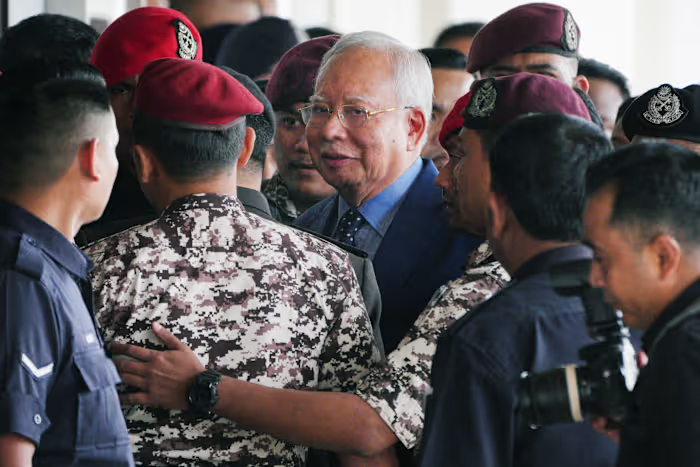
In a landmark legal decision, former Malaysian Prime Minister Najib Razak has been convicted on all charges relating to the multibillion-dollar 1MDB corruption scandal. The verdict, delivered by Malaysia’s High Court, found the 72-year-old guilty of abuse of power and extensive money laundering tied to misappropriated funds from the state-owned investment vehicle. This ruling deepens the former leader’s legal troubles and underscores ongoing efforts to hold high-profile figures accountable in one of the globe’s most complex graft investigations.
Conviction on Abuse of Power and Money Laundering
Najib faced a total of 25 charges, including four counts of abuse of power and 21 counts of money laundering linked to the alleged diversion of billions from the 1Malaysia Development Berhad (1MDB) sovereign wealth fund. The court determined that Najib illegally received large sums of money into his personal accounts during his time in office.
Presiding Judge Collin Lawrence Sequerah ruled the prosecution had proven its case beyond reasonable doubt, rejecting Najib’s claims that the funds originated from legitimate sources such as political donations and dismissing arguments that he was misled by financial advisers. The verdict reflects the court’s stance that the former prime minister misused his political position for personal financial gain.
Implications and Legal Fallout
The conviction adds to Najib’s existing prison time; he is already serving a term following a previous corruption verdict. With this latest guilty verdict, he faces potential additional decades behind bars along with substantial fines once sentencing is determined.
Political analysts suggest the outcome could reverberate through Malaysia’s political landscape, potentially affecting Najib’s party and its place within the ruling coalition. The 1MDB case, which has drawn international scrutiny and led to investigations in multiple countries, remains a defining chapter in Malaysia’s recent political history.
Background: The 1MDB Scandal
The 1MDB scandal erupted after billions were allegedly siphoned from Malaysia’s state investment fund, which was designed to support economic development. Investigators believe at least $4.5 billion was misappropriated through a web of offshore accounts, shell companies, and complex financial transactions, touching jurisdictions around the world. The case has spurred global legal actions, including fines against major financial institutions and ongoing hunts for fugitive financiers tied to the scheme.


