


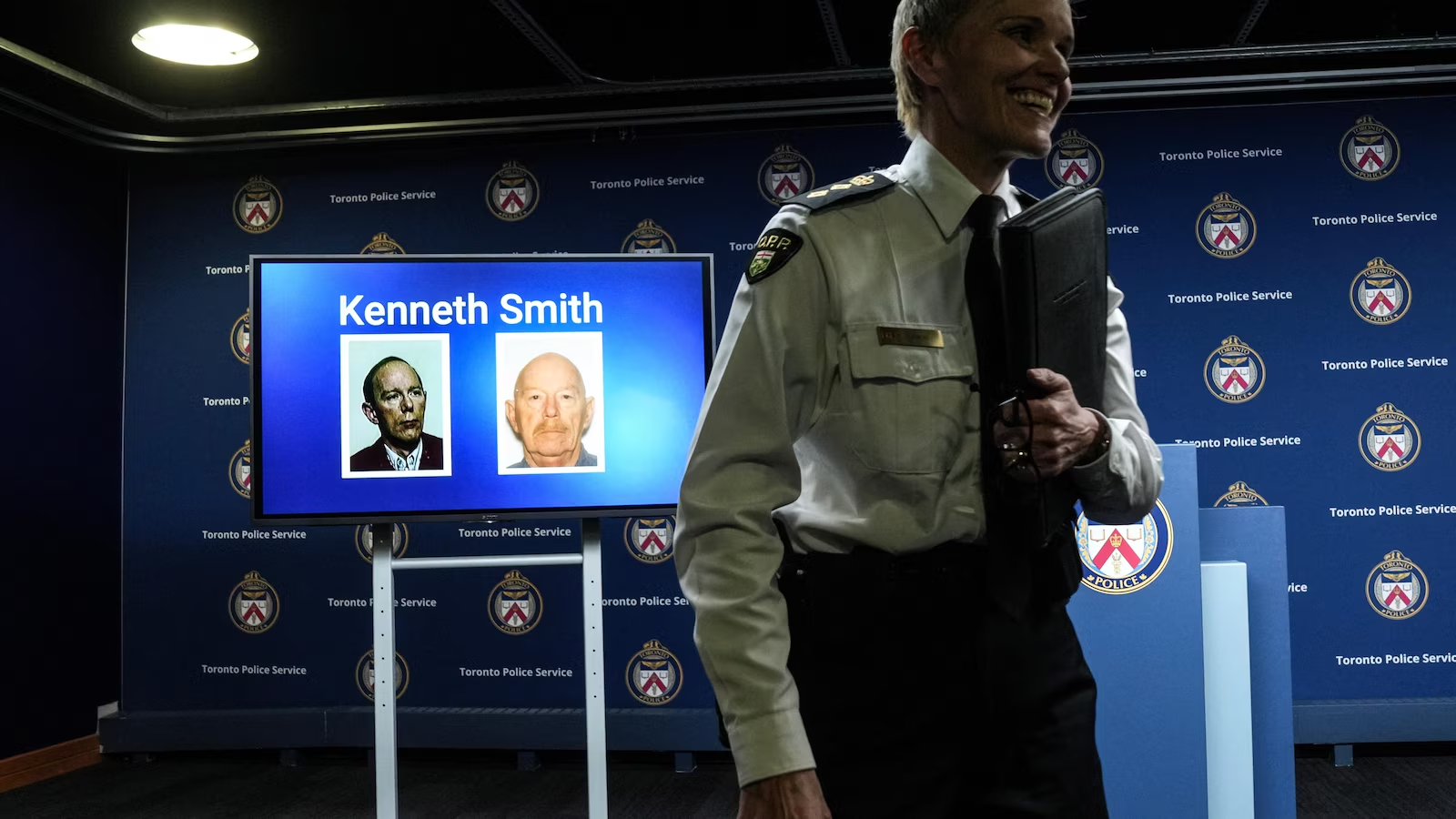
Toronto police have announced a breakthrough in three decades-old murder investigations, linking all three killings of women — from the early 1980s to the late 1990s — to a single suspect now deceased. The revelation follows cutting-edge forensic testing and genetic genealogy that helped investigators connect the dots on cases that had remained unsolved for decades.
Forensic Advances Point to Deceased Suspect in Historical Killings
Detectives revealed that DNA profiling and genetic genealogy breakthroughs led them to identify a man believed responsible for the cold-case murders of three Toronto women. The suspect, who died in 2019 at the age of 72, had lived and worked in the area at the times the victims disappeared and was previously known to law enforcement for sexual assault offenses.
Police credit the use of public DNA databases and genealogy techniques — tools increasingly employed worldwide to crack long-standing cases — with providing the evidence needed to finally match the suspect to the crimes.
Victims Spanned Years and Different Crime Scenes
The three linked victims were found under various circumstances:
- A 25-year-old woman was discovered in the Rouge River in 1982 after being sexually assaulted and beaten.
- Another woman, 23, was found shot in a township outside Toronto in 1983.
- A 41-year-old was killed by blunt force in her own apartment in 1997.
Each case had once appeared unrelated, but modern forensic tools confirmed the same individual was connected to all three homicides.
Investigators Warn More Cases Could Be Connected
While police have officially linked the three murders to the deceased suspect, authorities have not ruled out the possibility of additional victims. With ongoing advances in DNA forensic science, cold cases — including those thought unsolvable — are being reviewed with renewed hope for resolution.
Detectives say families of victims have expressed deep relief following the long-awaited answers, even though many years have passed.


