Conflict Escalates Regionally After Major Strikes on Iran
A rapidly intensifying war triggered by coordinated US and Israeli air and missile strikes on Iran has spread widely across the Middle East, touching Lebanon, Gulf Arab states and beyond. The campaign, now entering a third day, has seen devastating blowback from Tehran and its allies, deepening fears of a prolonged regional crisis.
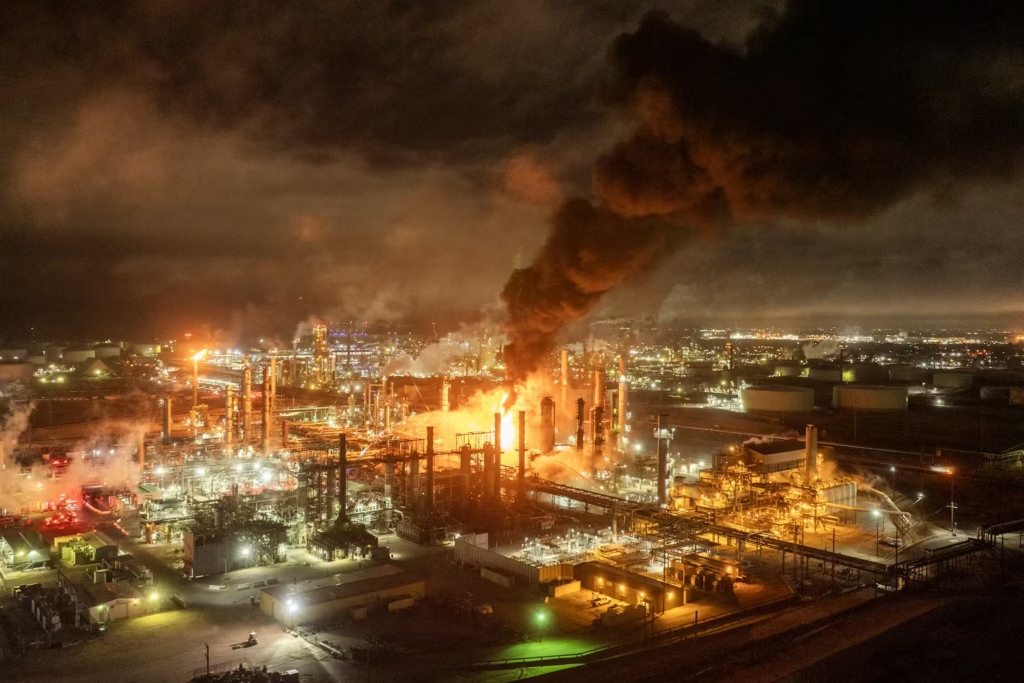
Preliminary reports indicate significant civilian casualties in Iran alone, with hundreds killed since strikes began. Retaliatory Iranian missile and drone attacks have struck Israeli territory and multiple Gulf capitals, including explosions reported in Dubai, Doha and Kuwait City. Kuwait’s air defenses mistakenly brought down several US fighter jets in the chaos of heightened aerial operations.

Hezbollah Opens a New Front from Lebanon
As the conflict broadens, Iran-aligned militia group Hezbollah has launched rockets and drones toward northern Israel from southern Lebanon in response to the strikes on Tehran and the reported killing of Iran’s supreme leader. Israeli forces have answered with heavy air attacks on Hezbollah strongholds in Beirut and across southern Lebanon, resulting in dozens of deaths and many wounded.
Civilians in Lebanese border regions are fleeing under evacuation orders, fearing another round of widespread violence. The Lebanese government has condemned Hezbollah’s unilateral military actions as reckless and outside state authority.
Gulf States Under Fire; Regional Powers Respond
Beyond Israel and Iran, Gulf nations are bearing the brunt of retaliatory strikes. Iranian drones and missiles have targeted US military assets and infrastructure in Bahrain, Qatar, Saudi Arabia and the United Arab Emirates, prompting diplomatic backlash and defensive measures. Saudi Arabia has summoned Iran’s ambassador over perceived violations of its sovereignty, underscoring growing regional unity against further escalation.
The disruption has extended to global oil markets, with production halts reported and fears of prolonged volatility. Warnings have emerged about the potential need for mass evacuations in the region should critical infrastructure such as nuclear facilities be damaged.