As the conflict between the United States and Iran intensifies, President Donald Trump is confronting one of the most critical decisions of his leadership—whether to deploy American troops on Iranian soil. While airstrikes and naval deployments have already increased, the possibility of “boots on the ground” marks a significant escalation that could reshape the Middle East and global security dynamics.
Rising Pressure for Ground Action
Military planners have reportedly developed detailed strategies for a potential ground operation, including targeting key strategic locations such as Iran’s vital oil infrastructure.
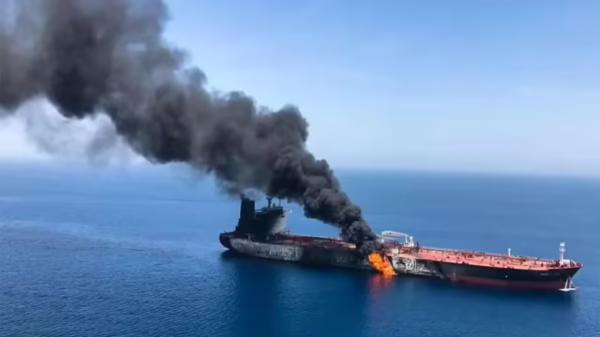
The U.S. has already strengthened its regional presence by deploying thousands of Marines and multiple warships near the Strait of Hormuz, signaling readiness for further action if required.
Although Trump has publicly stated there are no immediate plans to send troops, he has not ruled out the option entirely, keeping military flexibility open amid evolving conditions.
High Stakes and Global Risks
A ground invasion of Iran would carry enormous consequences. Analysts warn that such a move could trigger a wider regional war, disrupt global oil supplies, and deepen economic instability worldwide.
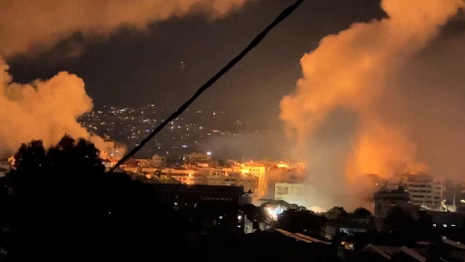
Iran’s strategic locations—especially energy hubs and the Strait of Hormuz—are critical to global trade, and any escalation could impact international shipping and fuel prices. Ongoing military strikes and retaliatory attacks have already increased tensions across the Middle East.
Experts also point out that public support within the United States for another large-scale ground war remains low, adding political pressure to an already complex decision.
A Defining Moment for U.S. Strategy
Trump’s approach has largely focused on air dominance and economic pressure, avoiding long-term ground engagement. However, some military voices argue that without troops on the ground, achieving decisive outcomes may be difficult.
At the same time, the administration appears cautious, balancing the desire to weaken Iran’s capabilities with the risks of prolonged conflict. The decision now hinges on whether strategic goals can be achieved without direct land intervention—or if escalation becomes unavoidable.