





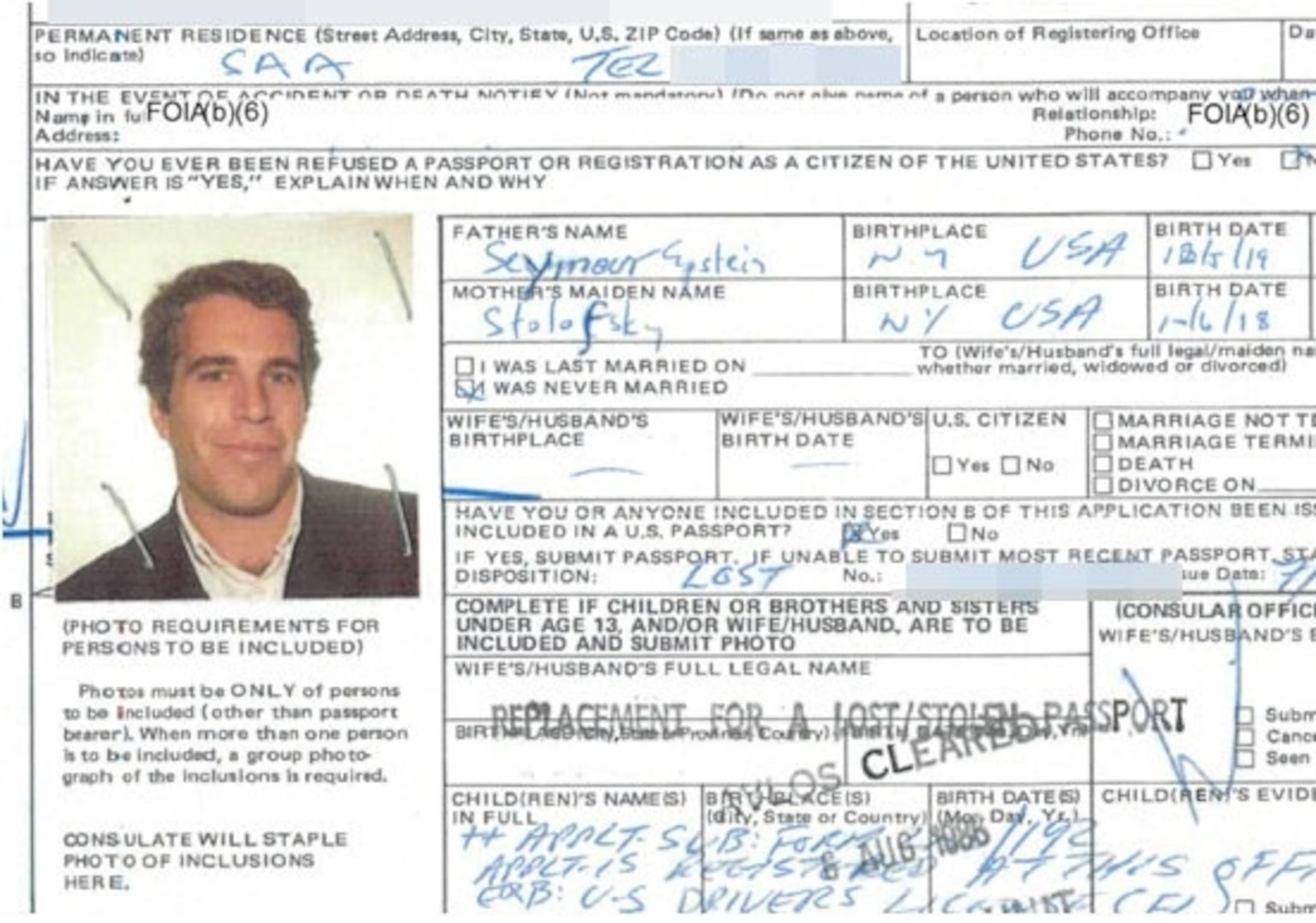
The U.S. political landscape was dominated today by the partial release of previously sealed documents tied to Jeffrey Epstein, as federal authorities began publishing hundreds of thousands of pages under a new transparency law. The move has ignited intense debate, with lawmakers accusing the government of withholding information. Simultaneously, President Donald Trump used a campaign stop in North Carolina to reiterate tough positions on immigration and international policy, including rhetoric about Venezuela.
Justice Department Begins Epstein Document Release Amid Backlash
After months of pressure from Congress, the Justice Department started issuing a massive cache of files related to Jeffrey Epstein’s criminal network, in compliance with a federal statute passed late last month. Though officials say the initial batch — totaling hundreds of thousands of pages — is being made public, many lawmakers contend that not all required records are being disclosed in full as the law mandates by its deadline.
Opposition leaders have characterized the partial publication as a potential violation of federal requirements, accusing senior justice officials of delaying or heavily redacting material that could reveal connections to influential figures and deepen understanding of Epstein’s decades-long abuse. Critics argue that transparency is essential for accountability and for victims seeking closure.
Legal deadlines tied to the Epstein Files Transparency Act, which was enacted earlier this year, required the release of unclassified investigative materials related to Epstein’s prosecutions. While authorities cite privacy protections for victims as justification for some delays, political leaders on both sides of the aisle are demanding a complete disclosure of the remaining content.
Trump Rallies Supporters on Immigration and Venezuela
On the campaign trail in North Carolina, President Trump addressed a receptive crowd with remarks linking national security to tougher immigration enforcement and foreign policy. He reiterated that his administration is intensifying border measures — a theme likely aimed at shoring up support ahead of the 2026 midterms — and suggested that U.S. forces might take further action regarding unrest in Venezuela.
Trump’s comments reflect persistent concerns within his party about immigration trends and geopolitical instability, as well as efforts to frame these issues as central to American safety and economic recovery. Analysts note that combining domestic concerns with assertive international language is a strategic effort to energize the Republican base.
Political Fallout: Congress Hits Back Over Transparency, Policy Decisions
In reaction to the document release and administration policies, leaders in Congress — particularly Democrats — have openly threatened legal challenges if full compliance with the transparency law isn’t met. Their statements underscore deeper partisan battles over government accountability and executive authority.
Beyond the Epstein files and border enforcement, the Trump administration’s broader legislative and executive actions — including renaming national institutions and policy shifts in healthcare and drug classification — continue to stoke debate across Washington. These developments signal that political tensions are likely to escalate as the midterm election cycle gains momentum.