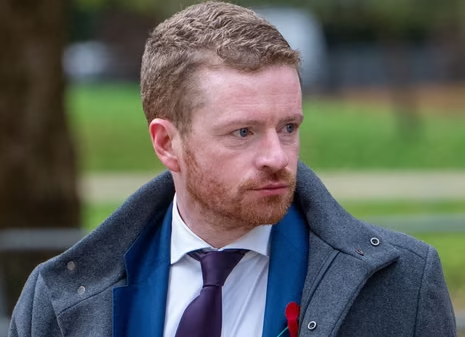
UK Labour leader Keir Starmer is working to strengthen his authority within the Labour Party after the departure of a senior figure closely linked to party strategy. The exit has triggered renewed discussion about leadership control, internal power dynamics, and how Labour positions itself ahead of future political battles.
Leadership Shake-Up Raises Questions
The departure of Morgan McSweeney, widely seen as a key organisational strategist, has unsettled parts of Labour’s internal structure. While the leadership insists the move is part of a broader reshaping effort, critics within and outside the party see it as a moment of vulnerability. Starmer now faces pressure to show that decision-making remains firmly under his command and that Labour’s strategic direction is unchanged.
Starmer Tightens Central Control
In response, Starmer is expected to place greater emphasis on a streamlined leadership team and clearer lines of authority. Allies argue that this reset allows him to consolidate power, reduce internal friction, and ensure messaging discipline. The focus remains on presenting Labour as a credible, stable alternative government, with policy consistency and electoral readiness at the forefront.
Party Unity and the Road Ahead
Maintaining unity will be crucial as Labour navigates this transition. Some members worry about the loss of institutional knowledge, while others believe the reshuffle could strengthen Starmer’s hand. With public scrutiny high, Labour’s leadership is keen to demonstrate that internal changes will not distract from its wider political mission.