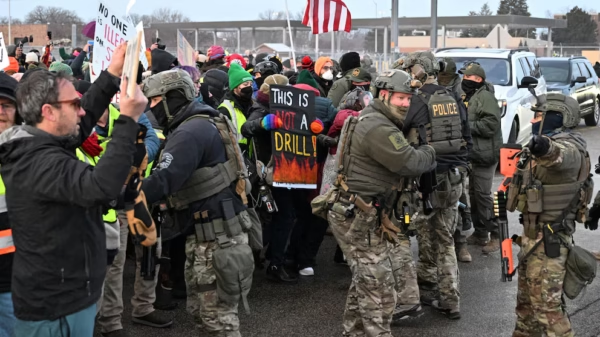
As immigration enforcement operations grow across the United States, concerns are rising over accountability within U.S. Immigration and Customs Enforcement. While the agency plays a central role in border security and deportation efforts, a review of internal records and court cases shows that some agents have been involved in criminal offenses and abuses of authority over the years.
The findings come at a time when ICE is expanding its operational reach, increasing arrests, and intensifying enforcement actions nationwide. Advocates and oversight groups say this expansion makes transparency and accountability more important than ever.
Documented Cases of Misconduct
Records from past investigations reveal that a number of ICE agents have faced criminal charges or disciplinary action for misconduct. These cases range from bribery and fraud to sexual assault and excessive use of force.
In several incidents, agents were accused of exploiting detainees or using their authority for personal gain. Some cases resulted in federal prosecutions, while others led to internal disciplinary measures. Although the total number of offenses represents a small portion of ICE’s workforce, critics argue that even isolated abuses can erode public trust.
Oversight advocates emphasize that immigration detainees are often in vulnerable positions, making strong monitoring systems essential. Without consistent supervision and independent review, they warn that misconduct can go undetected.
Oversight Challenges as Enforcement Grows
As immigration enforcement operations increase, so does the scale of responsibility placed on federal agents. With expanded detention facilities and more field operations, monitoring every interaction becomes more complex.
Former officials and legal experts note that ICE operates in high-pressure environments where agents exercise broad discretion. This authority includes arrest powers, detention management, and investigative responsibilities. While such powers are legally granted, they also carry the risk of misuse if safeguards are weak.
Internal watchdog offices and the Department of Homeland Security’s inspector general are tasked with investigating allegations. However, transparency advocates argue that disciplinary outcomes are not always made public, limiting public awareness.
Calls for Stronger Accountability Measures
Civil rights organizations and policy analysts are calling for reforms aimed at strengthening internal oversight. Proposals include enhanced body camera usage, independent complaint review boards, and clearer reporting requirements for disciplinary actions.
Supporters of ICE maintain that the majority of agents carry out their duties professionally and lawfully. They argue that enforcement remains essential to national security and immigration law compliance.
Still, as ICE continues to expand its footprint, the debate over accountability is expected to intensify. Lawmakers on both sides of the aisle have expressed interest in reviewing oversight structures to ensure that enforcement authority is not misused.
Conclusion
The expansion of federal immigration enforcement brings renewed focus to the systems designed to monitor those in power. While most agents operate within the law, documented cases of misconduct highlight the need for consistent oversight, transparency, and safeguards. As enforcement efforts grow, maintaining public trust may depend as much on accountability as on operational effectiveness.