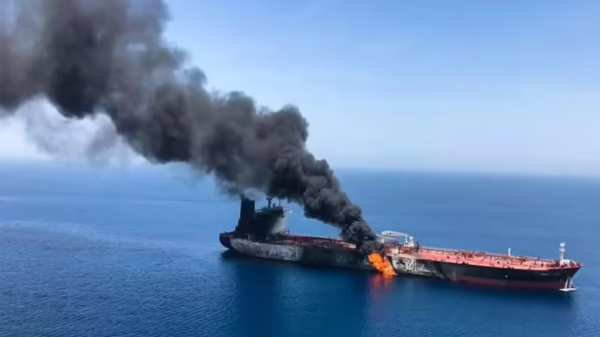
Tensions in the Middle East have intensified after the United States launched a naval blockade targeting Iranian ports and traffic through the Strait of Hormuz. Despite the aggressive move, US President Donald Trump has claimed that Iranian officials are signaling a willingness to negotiate, raising hopes for a potential diplomatic breakthrough amid rising global uncertainty.
🚢 US Blockade Targets Key Global Oil Route
The US military has begun enforcing restrictions on vessels linked to Iran, focusing on the strategically vital Strait of Hormuz—one of the world’s most important oil shipping lanes. The action follows the collapse of recent peace talks between Washington and Tehran, which failed to resolve disputes over Iran’s nuclear program and regional security concerns.
The blockade is designed to pressure Iran economically by limiting its oil exports and maritime trade. However, the move has raised fears of escalation, with Iran warning of possible retaliation and labeling the action as a violation of its sovereignty.
Reports also indicate that some Iran-linked vessels have continued to pass through the strait despite the blockade, highlighting challenges in enforcement and the risk of confrontation at sea.
🤝 Trump Claims Iran Interested in Negotiations
Amid the rising tensions, President Trump stated that Iranian officials have reached out and expressed interest in striking a deal. He emphasized that any agreement would strictly prevent Iran from developing nuclear weapons.
While this claim has not been independently verified, it signals a possible opening for diplomacy following the breakdown of earlier negotiations. Analysts suggest the blockade may also serve as leverage to push Tehran back to the negotiating table.
Still, uncertainty remains high, with both sides maintaining strong positions and no formal talks confirmed.
📉 Global Impact: Oil Prices and Security Risks Rise
The crisis has already begun affecting global markets. Oil prices briefly surged above $100 per barrel after the blockade announcement before stabilizing, reflecting fears of supply disruption from the Gulf region.
The Strait of Hormuz handles a significant portion of the world’s oil shipments, making any disruption a major concern for energy-importing nations. Experts warn that prolonged instability could lead to higher inflation, supply chain disruptions, and broader economic challenges worldwide.
Meanwhile, international leaders are calling for renewed diplomatic efforts to prevent further escalation and ensure the safe flow of global trade.