


States Sue to Stop Immigration Enforcement Actions
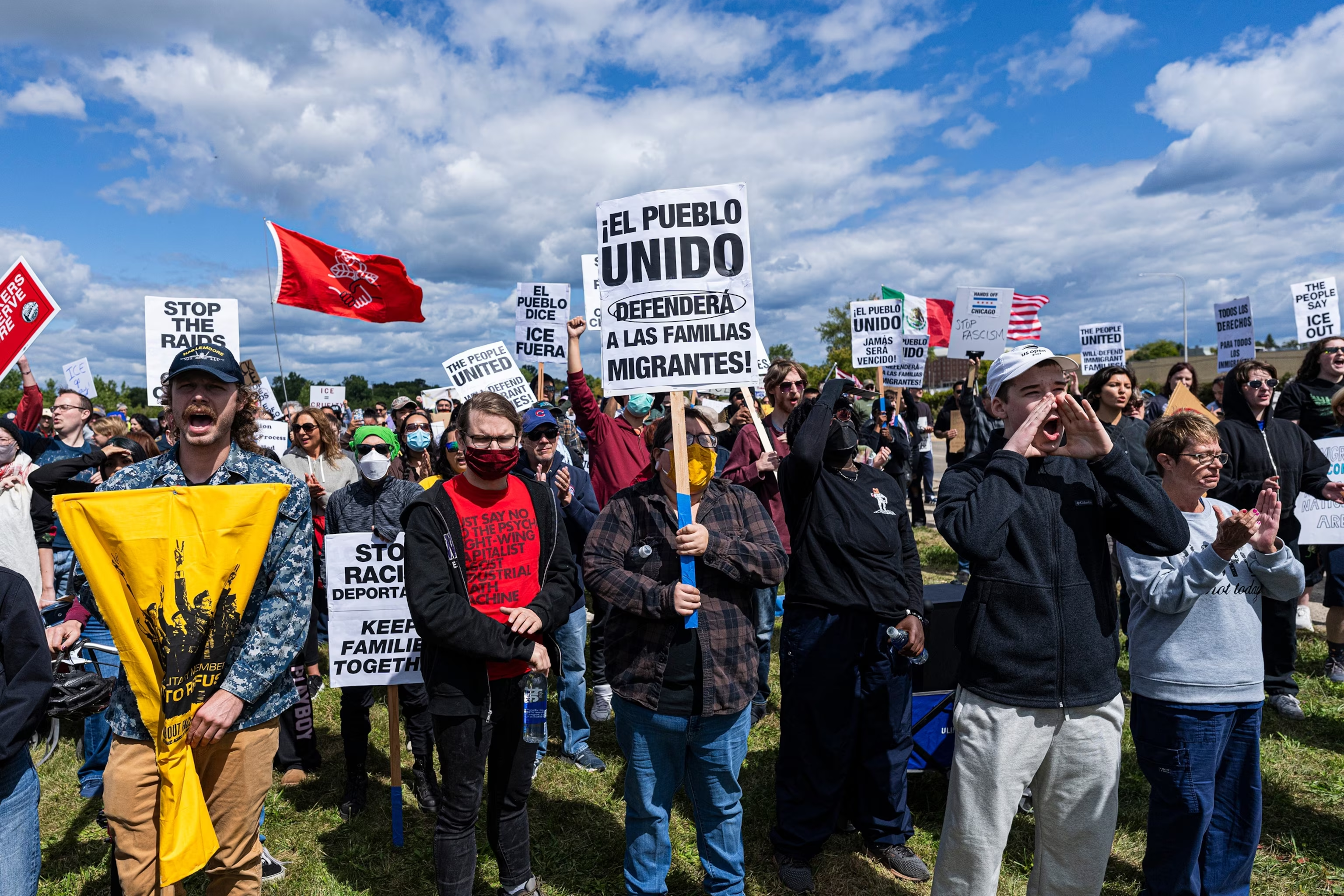
Minnesota and Illinois have launched separate federal lawsuits targeting the current U.S. administration’s deployment of immigration enforcement officers, arguing the operations violate constitutional rights and state sovereignty. The legal actions follow a highly controversial federal immigration operation that has drawn national attention and sparked widespread protests.
Allegations of Federal Overreach and Unlawful Tactics
In Minnesota’s complaint, filed in federal court with the cities of Minneapolis and Saint Paul as co-plaintiffs, state officials allege that the mass deployment of Department of Homeland Security (DHS) agents—often masked and heavily armed—amounts to an unlawful intrusion into local communities. The lawsuit seeks to halt the surge, impose limits on enforcement tactics, and require federal officers to wear identification and body cameras.
Illinois’ legal challenge, supported by the city of Chicago, claims that federal immigration agents have engaged in an “organized bombardment” of Chicago and surrounding areas. The lawsuit accuses agents of using military-style tactics, warrantless interrogations, and chemical agents in ways that threaten public safety and instill fear in residents.
Context: Incident That Sparked the Legal Battles
The wave of litigation comes in the wake of a fatal shooting in Minneapolis, where a mother was killed by an Immigration and Customs Enforcement (ICE) officer during enforcement activity, prompting public outcry and demonstrations. Officials in both states argue that the enforcement campaign, known regionally as “Operation Metro Surge,” has escalated tensions and undermined trust between communities and federal authorities.
Legal filings emphasize that the surge in immigration enforcement not only violates state rights under the Tenth Amendment but also amounts to a politically motivated response to states with sanctuary policies. Both lawsuits request that federal courts block specific tactics and significantly limit the scope of immigration operations within their jurisdictions.


