





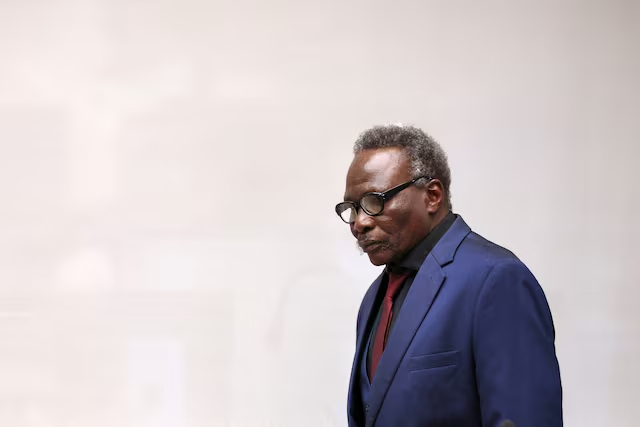
In a landmark case reaching the Hague, prosecutors at the International Criminal Court have requested a life sentence for Ali Muhammad Ali Abd-Al-Rahman, commonly known as “Ali Kushayb”, the former militia leader found guilty of orchestrating one of the most brutal campaigns in the Darfur region. Convicted earlier this year on 27 counts of war crimes and crimes against humanity, the court is now deliberating his punishment — a decision that carries deep implications for justice in Darfur and beyond.
Brutal Campaign and Conviction
The Darfur conflict erupted in the early 2000s when non-Arab rebel groups took up arms against the Sudanese government, triggering a government-backed militia response. Kushayb, as a senior commander of the Janjaweed militia, was found responsible for mass executions, rapes and the use of an axe to kill two prisoners — actions prosecutors described as carried out with “enthusiasm and vigour”. His conviction marked the first successful prosecution by the ICC for crimes committed during the Darfur conflict.
Life Sentence vs. Defence Request
During the sentencing hearing, prosecutor Julian Nicholls urged the judges to impose life imprisonment, arguing that the severity and scale of the crimes warrant the maximum penalty. Meanwhile, the defence, pointing to his age (76) and the time already spent in custody since his 2020 surrender, is pushing for a drastically reduced sentence of seven years — potentially leading to release within months.
Broader Implications for Darfur and International Justice
The outcome of this sentencing will resonate far beyond one individual. For victims in Darfur — where estimates suggest up to 300,000 killed and millions displaced — it signals whether impunity for mass atrocity may finally be addressed. At the same time, Sudan remains engulfed in new waves of violence, especially since 2023, underscoring the challenges of accountability in ongoing conflicts.